
The Amazon Prime Rewards Visa Card requires you to spend at least $2,780 per year on Amazon and Whole Foods before its rewards even cover your Prime membership. Most people don't do that math before applying.
The card itself has no annual fee. But the $139 Prime membership you need to hold it? That cost is baked in, and it resets every year whether you use the card or not.
This article is for the Amazon-loyal shopper who orders two or three times a month, already pays for Prime, and wants to know if adding this card to their wallet will pay off or just add another line to their Chase login.
What Does the Amazon Prime Rewards Visa Card Pay You Back?
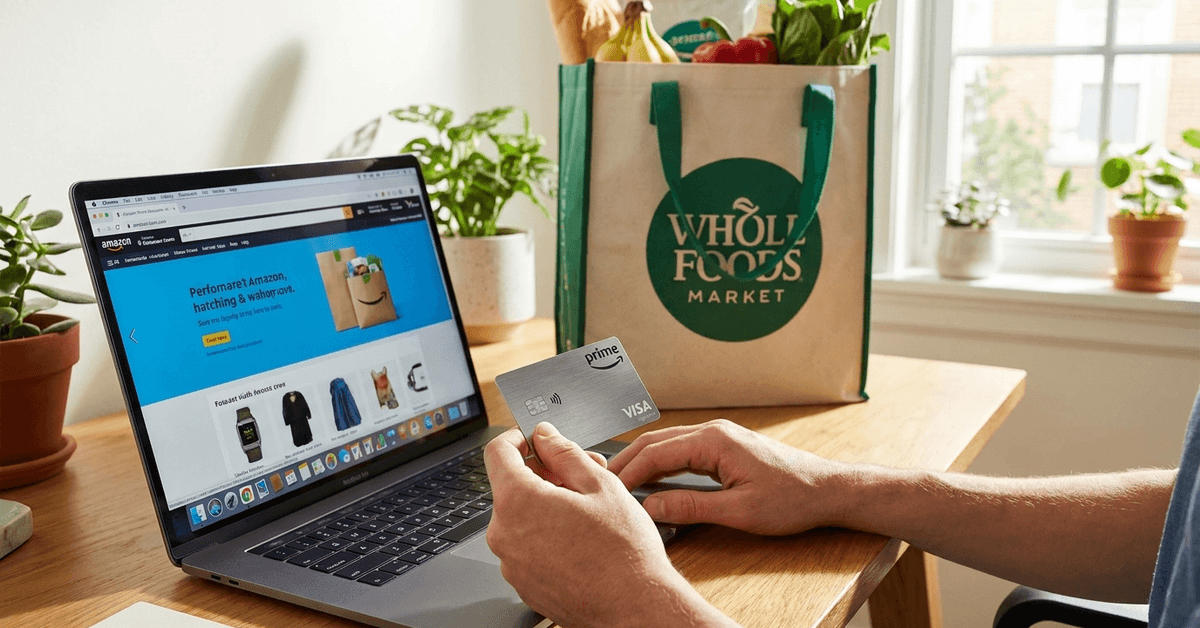
The Amazon Prime Rewards Visa Card is a Chase-issued Visa Signature card that earns 5% back at Amazon.com, Amazon Fresh, and Whole Foods Market for active Prime members. Non-Prime cardholders earn 3% in those same categories.
Outside the Amazon ecosystem, earnings drop fast. Restaurants, gas stations, and drugstores get you 2% back. Everything else sits at 1%.
Where the 5% Rate Falls Apart
I think the 5% rate sounds impressive until you realize it only applies to purchases within Amazon's ecosystem.
Spend $500 a month on Amazon and Whole Foods combined, and you're earning $25 back monthly, or $300 a year. Subtract the $139 Prime fee, and your real net reward is $161.
Now compare that to a flat 2% cash-back card with no membership gate. At the same total spending level across all categories, the gap shrinks fast.
The Chase Travel Portal Disconnect
One thing that trips up people who carry other Chase cards: Prime Visa points cannot transfer into Chase Ultimate Rewards.
If you have a Chase Sapphire Preferred or Freedom Unlimited, those points live in a completely separate bucket. You cannot combine them.
How to Apply for the Amazon Prime Rewards Visa Card Step by Step
You apply for the Prime Visa directly through Amazon.com while logged into an active Prime account. The application routes to Chase Bank, and the entire process is online.
Check Your Prime Membership Status First
Log into your Amazon account and look under "Account & Lists." Your Prime status shows there. If you don't have an active subscription, Amazon redirects you to sign up for Prime before you can access the card application page.
A $14.99 monthly or $139 yearly Prime subscription is mandatory for the 5% rewards tier.
Fill Out the Chase Application
The application opens a secure Chase form. You'll need to provide your full legal name, Social Security number, current address, employment status, and annual income. Chase pulls a hard inquiry on your credit report during this step.
Wait for Your Approval Decision
Chase often gives instant approval decisions.
But if your credit file has any flags, like too many recent applications or inconsistent personal information, the system routes you to a manual review. A decision letter arrives within 7 to 10 business days in those cases.
What Credit Score Do You Need for the Prime Visa?
The Amazon Prime Rewards Visa Card typically requires a credit score in the 670 to 740+ range, though Chase does not publish a hard minimum.
Chase's Unofficial 5/24 Rule and the Prime Visa
Chase is known for rejecting applicants who have opened five or more new credit cards across all banks within the past 24 months. This is called the 5/24 rule.
I would pay close attention to this if you've opened cards recently.
The Prime Visa may be exempt from 5/24 based on several 2026 data points from Doctor of Credit, but Chase has never officially confirmed the exemption. Applying while at or above 5/24 is a gamble.
Hard Inquiry Impact
Every application triggers a hard pull on your credit report. Expect a temporary dip of about 5 to 10 points. If you get denied, that hard pull still sits on your report for two years.
Prime Visa Sign-Up Bonus in 2026
New cardmembers receive a $150 Amazon gift card instantly loaded to their account upon approval, according to current Chase and Amazon listings as of October 2026.
During Prime Day 2026, the bonus temporarily jumped to $200 with no spending requirement.
| Feature | Prime Visa | Amazon Visa (No Prime) | Flat 2% Cash-Back Card |
|---|---|---|---|
| Amazon/Whole Foods rate | 5% | 3% | 1-2% |
| Restaurant/gas/drugstore rate | 2% | 2% | 2% |
| Everything else | 1% | 1% | 2% |
| Annual card fee | $0 | $0 | Varies |
| Prime membership needed | Yes ($139/yr) | No | No |
The Prime Visa wins on Amazon spending, but a flat 2% card beats it on every non-Amazon purchase.
Who Should Skip the Amazon Prime Rewards Visa Card?
If your Amazon spending falls below $230 a month, the 5% rate will not recoup your $139 Prime fee through card rewards alone. The breakeven math requires $2,780 in annual Amazon and Whole Foods spending just to cover Prime.
The Cancel-Prime Downgrade Trap
Cancel your Prime membership, and the card automatically converts to the standard Amazon Visa. Your earn rate drops from 5% to 3% on Amazon purchases. No notification, no grace period. I would argue against the popular advice that everyone who shops on Amazon should get this card.
If you spend under $200 a month on Amazon and you don't use Prime Video, Prime Reading, or free shipping enough to justify the $139 fee independently, this card becomes a net cost.
A Citi Double Cash or Wells Fargo Active Cash at a flat 2% everywhere gives you more flexibility without the membership gate.
Where the Prime Visa Fits Best
The card works for households that already treat Prime as a non-negotiable expense. If your family orders groceries through Amazon Fresh, shops Whole Foods weekly, and buys household supplies on Amazon, the 5% compounds into real money.
How to Squeeze More Out of Your Prime Visa Rewards
Redeeming your points at Amazon checkout feels convenient, but it may not be your best move.
Statement Credits vs. Checkout Redemption
Points redeemed at checkout apply at a rate of 1 cent per point. Statement credits through Chase work the same way. The real difference: checkout redemptions sometimes exclude partial-point orders and promotional pricing stacks.
I think redeeming as a statement credit through Chase keeps things cleaner, especially if you want to track your actual cash-back totals across months.
Watch for Targeted Bonus Promotions
Chase and Amazon periodically run targeted promotions for cardholders.
During Prime Day 2026, eligible cardholders earned 7% back on Amazon purchases when selecting No-Rush Delivery. These offers show up in your Amazon account notifications or Chase app alerts.
Keep your notification settings turned on. These deals rotate without much fanfare.
Common Mistakes When Applying for the Prime Visa
A rewards card can quietly cost you money if the balance rolls over each month. The Prime Visa's purchase APR sits around 19.49% to 28.24% as of mid-2026.
- Carrying a balance for even one month at 24% APR wipes out months of 5% rewards
- Cash advances carry separate, higher rates and no grace period
- Missing a payment triggers a penalty APR that can stick for months
- Applying while above Chase's 5/24 threshold risks a denial and a wasted hard inquiry
Points Don't Expire, But There's a Catch
Your Amazon Rewards points have no expiration date as long as your account stays open. Close the card or let your Amazon account lapse, and those points vanish.
Questions People Ask About the Amazon Prime Rewards Visa Card
A few things that come up often when people research this card:
- Q: Can I apply for the Prime Visa without a Prime membership?
Amazon won't let you access the Prime Visa application without an active Prime subscription. You can apply for the standard Amazon Visa instead, which earns 3% on Amazon purchases and has no membership requirement. - Q: Does the Prime Visa count toward Chase's 5/24 rule?
Reports from 2026 suggest the Prime Visa may be exempt from 5/24, but Chase has never confirmed this publicly. If you're at exactly 5/24, applying is a risk. Test it only if you're comfortable with a potential denial and hard pull. - Q: What happens to my points if I cancel Prime?
Your card converts to the standard Amazon Visa. Points you've already earned stay in your account. Your future Amazon earn rate drops from 5% to 3%. - Q: Is the Prime Visa better than the Amazon Store Card?
The Store Card, issued by Synchrony, works only on Amazon.com. The Prime Visa works anywhere Visa is accepted. The Store Card sometimes offers deferred interest financing, but that feature carries a trap: miss the payoff deadline, and you owe interest on the full original balance retroactively. - Q: Can I use the Prime Visa internationally?
Yes. The card charges zero foreign transaction fees, and it runs on the Visa Signature network, which is accepted widely outside the US.
Conclusion
The Amazon Prime Rewards Visa Card pays well if your spending already lives inside the Amazon ecosystem. The $2,780 annual breakeven number is the figure worth writing down before you apply.
Pair it with a flat-rate card for non-Amazon spending, and the two together cover more ground than either one alone. Start the application at Amazon.com while your Prime membership is active to get the full 5% rate from day one.